


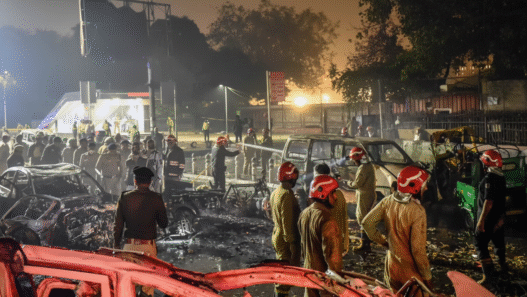




Over the past few months, the youth of Nepal have risen to power in an extraordinary way, that is, by leading one of the most significant and influential youth-led uprisings in their country’s modern history. The epicenter of this movement is something that seems to be very basic but is very influential in nature—social media restrictions. The authorities’ tightening of control over the internet soon escalated to large-scale street protests led by a digital-savvy generation, Gen Z. As a generation that chooses to communicate, connect, and express themselves digitally, it is only natural that Nepal Gen Z has grasped this issue and made it the core of their protests.
This report by UntoldNow is meant to bring you the freshest and most significant news. The revolt is not just a response to the ban imposed on the use of social media; rather, it mirrors a wider fight for the preservation of one identity, rightful participation in social structures, and the democratic process.
Contents
1- The Spark: Social Media Shutdowns
In the middle of the parental political unrest, the government plotted to shut off spaces like Facebook, Instagram, TikTok, and the like, intending to control what comes in and goes out—to and from the masses. In fact, it did quite the opposite, as it propelled the youth further into revolt.
The shutdown was going to be the equivalent of a total war against the Gen Z population, those who were using the net to be up-to-date, to create their own spheres of common interest, and to give their speech. Consequently, a firestorm of anger and protests was ignited: Youngsters, students, and even teenagers poured into streets with demands for freedom of expression and for the authorities to account for their actions. The protesters argued that the social media access idea cut was not the solution to their problems but just a visual presentation of the political system’s decay—corruption, lack of transparency, and authoritarian rule.

2- Digital Natives Fighting for Their Voice
Gen Z’s decision to join the protests is utterly different from that of any other generation. They have had the privilege of having a smartphone and social media since their childhood, so, for them, the online world is as important as the real one when it comes to activism. The slogans of the times became hashtags, secret chatting apps turned into rallying points, and a short video made public immediately went viral in hours, exposing wrongdoings.
The most remarkable feature was the fast manner via which these protests were spread. Rather than being silenced, the restriction had the opposite effect—the voice of dissent became even louder. Young protesters began to share step-by-step guides on evasion of censorship, give instructions for the development of offline groups, and share stories of courage. Digital literacy ceased to be a tool of alienation but was turned into a tool of resistance.
3- From Online Outrage to Organized Movements
The social unrest did not develop in a disorderly manner because it was, in fact, deeply planned and coordinated. Student unions at the local level, communities of technology, and groups of civil society worked hand in hand to organize the demonstrations that took place in different urban areas. Although peaceful marches, events for raising awareness, and symbolic acts of rebellion had kept the momentum going, social media platforms—even if they were technically banned—had still been able to circulate the content through the use of VPNs, mirror sites, and peer-to-peer sharing.
Furthermore, the movement was also supported by international audiences. Media outlets around the globe, human rights organizations, and expatriate communities were sharing reports and videos from Nepal, and thereby, exerting pressure on the authorities to change their course.

4- The Broader Impact
The movement has become a powerful platform for debating not just the rights of the digital world but also governance, transparency, youth empowerment, and the like. It has divulged quite a large disconnect between political leadership and what the younger generations want, thus making it necessary for the government to put its strategy under scrutiny.
Experts state that the protests are much more than a simple reaction. They see this as an indication of newly emerged political participation. Nepal’s youth are the voices of the reforms, the decentralization of power, and an administration that is transparent. In the process, they are not only setting the new standard for activism but also reshaping it in the digital era.
What’s Next?
It is still unsure whether the protest’s long-term impact will be felt despite the concessions made by the government. Will the authorities accept the demand for the communication channels to be open? Will the youth organizations be able to make a successful transition from protest to policy influence? These are Nepal questions to answer, and to the rest of the world, who will be observing this closely.
As public discourse becomes more and more centered on technology across the globe, Nepal Path is an example that censorship can kindle bigger and more impassioned voices. The fight for freedom of speech has been there for ages, but the instruments and strategies have changed. This news is published by UntoldNow to show how young voices are shaping the future of Nepal and beyond.